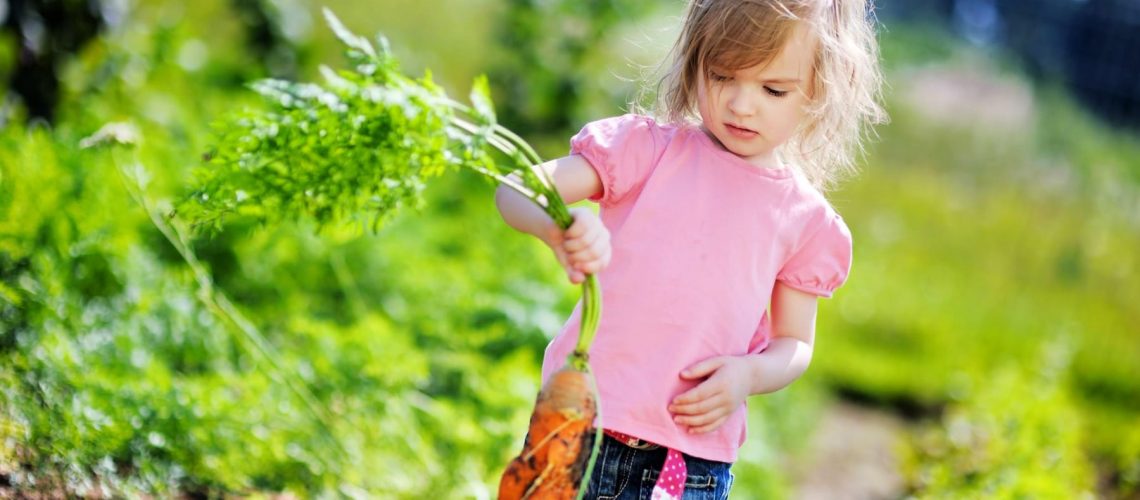

Anytime is a great time to grow food. It’s the best way to enjoy organic, and the cheapest way to support your mental health. There’s something very grounding about having your hands in the dirt. At first, yes, it can be challenging, but after a while, a family veggie patch fast becomes a place the kids love to call their own. Imagine walking out the door, behind you are the kids. Gloves in hand, boots on, ready for action.
Kids veggie patch
A food garden isn’t as hard as you may think. Once you know a few simple principles, you have them for life, and your kids will as well. Self-sufficiency is an awesome ideology, but that’s not the goal for a beginner. Let’s get started by going over a few basic principles so the kids can harvest some home-grown goodness first go.
Step 1 – sunlight
There’s one big essential when you’re working out where to put your food garden, and that’s the sun. Watch how the sun moves around your yard because you’ll need 6-8 hours of sun per day for your plants to thrive. If you can also give your patch some relief at the end of the day with some shade, it will thank you, especially in summer. This is a great decision for the kids to be involved in because it will help them understand why it’s so important.
Step 2 – soil
Most veggie and herb plants need nutrient-dense soil. You’ll get a better crop if you plant in rich soil. It makes sense when you think about it. It’s just like how we perform. We need a spectrum of vitamins and nutrients to fuel our bodies, and this is the same for plants. Work through compost, cow manure, organic soft pellets, and maybe some lime. Your soil needs to drain well so avoid compacting it down with your feet. Position some stepping stones if it’s a large area.


Step 3 – plant choice
It’s important to select the right plants for your season and climate. We live in a temperate climate so we can only grow some crops at specific times of the year. TEMPERATE GUIDE DOWNLOAD
Start small and do not plant too much. Choose 3-4 different plants with the kids. Read the information cards on the seedlings, and don’t buy too many. Plant to the guide. If it says 30 cm apart, do this. Overcrowding can invite disease, minimise air flow, and not allow enough sunlight.
Step 4 – mulch and water
The last essential step to setting up a kid’s veggie patch is to mulch and water. These both work together to ensure the soil around the roots of your food crops are kept moist and cool. A lot of veggies and herbs have shallow roots, which means they aren’t very good at fending for themselves, especially in the hot weather. We like using sugarcane mulch, but you’ll find many different options on the market that break down and add benefits to your soil. Choose natural materials that will decompose, sugarcane mulch or pea straw, etc, and your veggie patch will love you. Water before and after adding mulch.
Kid’s veggie patch
A kid’s veggie patch is an awesome place to visit daily to check on your seedlings, ensure the pests haven’t arrived, and pull out any weeds. Grow your food at home, then harvest and cook something together with the kids. It’s not only a life lesson, but it’s teaching them about real food. Food that doesn’t come from a pantry. Food which is grown.
Have you read our article? 10 reasons why a children’s garden is the best investment