Australia. Land of the brave! With some of the world’s most venomous creatures living right on our doorstep, it’s no wonder the Bee Gees gave us Stayin’ Alive! There have been reports of Blue-ringed Octopuses being spotted around Lake Macquarie and our local beaches. Have you ever seen one? While they may be small and fascinating to look at, Blue-ringed Octopuses are highly venomous and should never be touched. Here’s what you need to know about these little locals and what to do if someone is bitten.
Small but seriously venomous
A Blue-ringed Octopus is small enough to fit in the palm of your hand, growing to around 10cm in length. But this is definitely one creature you don’t want to pick up! Despite its tiny size, its venom is extremely potent, and a bite can be life-threatening. If you spot one in the water or on the shore, admire it from a safe distance and never touch or handle it.
Experts at hiding
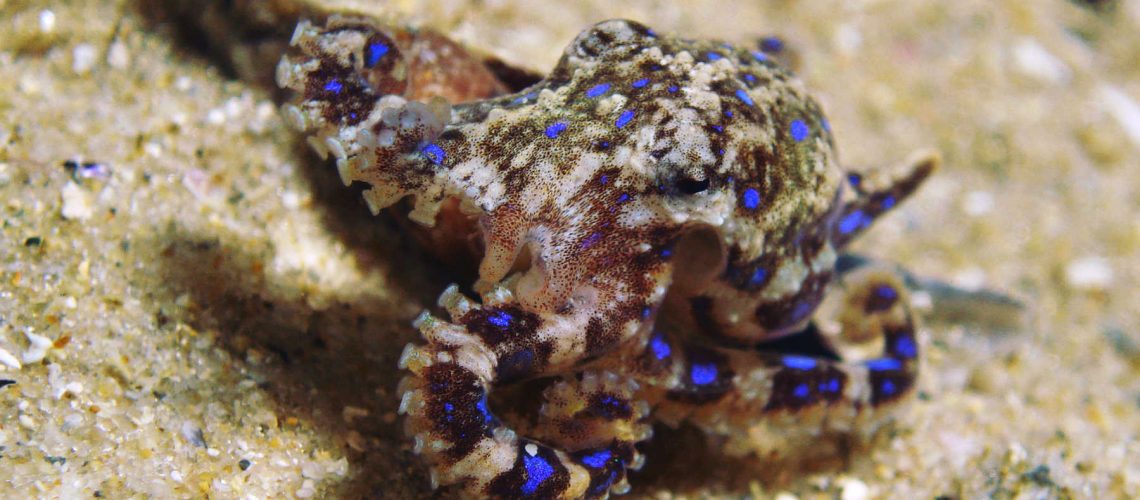
Because of their small size and excellent camouflage, Blue-ringed Octopuses can be surprisingly difficult to spot. They may hide behind rocks in rock pools, between shells, inside small rocky hollows, or even in bottles and cans underwater. Their brown and yellow colouring helps them blend into their surroundings. So keep an eye on where little fingers are reaching when exploring rock pools and shallow water with the kids.
Jet-powered!
Blue-ringed Octopuses prefer to avoid contact with humans. They will usually hide in crevices, squeezing and contorting their bodies to fit into surprisingly small spaces. When they need to move around the ocean or lake, they take in water and then forcefully squirt it back out. This creates jet propulsion that sends them through the water. Pretty clever, and definitely a fun way to travel!
Flashing blue
Blue-ringed Octopuses usually display their brilliant blue rings when they feel threatened or are defending themselves. Their body can change to a bright yellow, making the blue rings stand out as a warning. If you accidentally come into contact with one, you may not even realise you’ve been bitten. Their bite can be tiny and painless, which means people may not know they’ve been envenomed. Never touch a Blue-ringed Octopus, and wearing reef shoes in the water can help protect your feet when exploring rocky areas.
Effects of a bite
So, how do you know if you’ve been bitten? A Blue-ringed Octopus bite can cause numbness, weakness, and paralysis, followed by difficulty breathing. Other symptoms may include nausea, vision problems, and, in severe cases, respiratory failure. The venom can cause paralysis while the person remains conscious, making it a particularly frightening experience. A bite itself can be tiny and may leave little or no obvious mark, so you may not realise you’ve been bitten. Blue-ringed Octopus bites can be fatal. If you suspect someone has been bitten, treat it as a medical emergency and call 000 immediately.
Give CPR if necessary
When someone is bitten by a Blue-ringed Octopus, call 000 immediately and begin first aid. If the person has been bitten on a limb, apply a firm pressure bandage over the bite, immobilise the limb, and keep them as still as possible. Start CPR immediately if they stop breathing and continue until medical help arrives. Blue-ringed Octopus venom can cause paralysis of the muscles needed for breathing, but with prompt first aid and medical treatment, recovery is possible. In hospital, a person who is unable to breathe may need assisted ventilation until the effects of the venom wear off. It’s a good idea to have the free Australian Red Cross First Aid app on your phone, which provides step-by-step first aid and CPR guidance, including information you can access offline.
Learn more about Funnel Web Spiders and Snakes that you might also see right here in Lake Mac. Keep your eye out for Razor Fish too!
References:
‘I thought I was going to die’: Father bitten by blue-ringed octopus at Marks Point – Drive – ABC Radio {Accessed 12/1/2022}
Blue ringed octopus | AIMS {Accessed 12/1/2022}
Fun Fact Sheet: Blue Ringed Octopus • Department of Primary Industries and Regional Development (fish.wa.gov.au) {Accessed 12/1/2022}